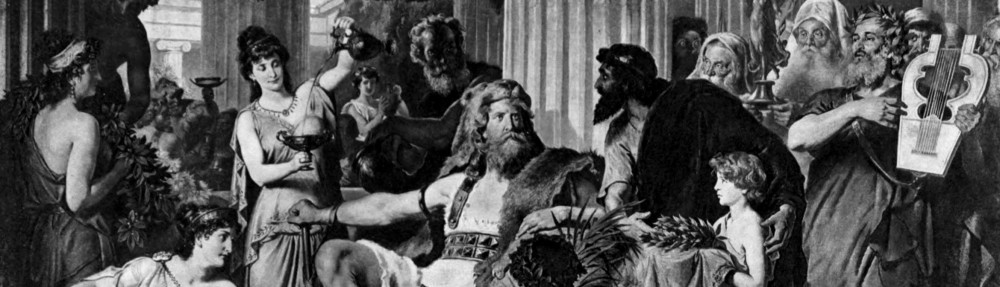
American politics operates on two stages of existence. There is the moral stage, where most of the action takes place. Here, various versions of the standard narrative play out in front of the national audience. The story is always the same, but the reaction of the crowd changes from performance to performance. American political theater is interactive, not just a ceremony or ritual for the people to observe. How the crowd responds will often direct how the players on the stage respond, depending upon the performance.
Then there is the empirical stage, where some minor dramas are acted out and new props are created for the main stage. This stage mostly serves as a support system for the actors on the main stage. The policy experts come up with “solutions” to “problems” and those “solutions” are maybe used by the main players on the big stage. Most of the time, what happens on this stage is a pantomime, where the players pretend they have the ability to implement their solutions or influence those who can implement them.
The way the drama of American politics usually works is the Left finds some issue, or maybe invents it, that they claim is a threat to the community. They have a variety of words and phrases to mean community. Currently, they are fond of “democracy” but there are plenty of others. This threat to the community can be real or imaginary, it does not matter. What matters is their reaction to it. This reaction is intended to gain the attention of the audience, exaggerate the danger and draw in the other players to the drama.
Now, once the threat is identified, the Left announces their scheme to address the threat and declares that “doing nothing is not acceptable.” This is the critical point in the drama, as the new character(s) on stage, the Right, always seeks to dismiss the danger. That’s their primary role at this stage. This legitimizes the debate over the issue. Is it a threat or is it not? Should something be done or nothing? The debate itself makes the alleged danger the focus of the drama, which makes it impossible to dismiss.
At this point, elements of the Right break ranks. The Right divides over whether this threat is real and needs addressing or is not real and should be ignored. Of course, the elements who think something should be done, have to have a plan, so they come up with an alternative to what the Left has offered as the default. This creates a nice triangle. The “soft” Right gets to pose as more concerned and moderate than the “hard’ Right and at the same time pose as more practical and sober minded than the Left.
This is where the empirical stage serves its role. On this level, the minor players argue about the new props used on the main stage. The policy commentators, wonks and experts wrangle over “new” ideas for solving the new problem. Sometimes they replay the old debates about old problems. This stage operates like off-Broadway or maybe a community theater. This is where the Right prefers to spend most of his time, working on policy arguments that will be nothing more than props on the main stage.
Now, on the main stage, once the three characters have emerged fully, the “soft” Right and Left direct the audience to boo and hiss at the “hard” right for being callous about this great threat to our community. After the “hard” right has been booed off the stage, the drama reaches its final scene. The two remaining characters argue over the right course of action, with the Right now repeatedly offering up solutions to the Left, which are rejected until finally one meets the Left’s satisfaction. The music plays and the curtain falls.
There are some variations to this formula. Sometimes the danger to the community gets a speaking part. This is where variations on the devil character get a shot on the main stage. These days, neo-Nazis and white supremacists are popular. Eager for a shot in the lime light, these players are always ready to answer the call. They are even willing to dress up in the costumes laid out for them by the Left. They relish being booed by the crowd as they make their entrance and final exist. It’s show business!
There can be other bad guys, as we saw with the #metoo stuff. In that case, the bad guy was the Jewish Hollywood type, lusting after the shiksas, using his power to force her into compromising herself. Since there is no role for the white knight to save the damsel in distress, the crowd was encouraged to cheer the brave shiksas, so they could summon the courage to vanquish the lusty Shlomo. The dramatic scene is the heroine finally speaking out as the bad Shlomo shrinks in terror at the empowered woman.
The key part of the American drama is like a real play, there’s nothing left of it after it is finished, other than memories of the performance. Homosexual marriage had a long run on the main stage, but now it is only performed, if at all, at the local level. The crisis, drama and resolution have been forgotten. Abortion is another drama that had its day, but is now largely forgotten. Once in a while a revival comes to town for the entertainment of old white women long past the point where abortion is a practical issue for them.
American theater is an essential element for the Left. It is what holds them together and gives them purpose. Like a theater group or traveling circus, the need to perform is what keeps them from splintering apart. For everyone else, it is like real show business. That is, a life that leads only to degeneracy, misery and the loss of self-respect. Whether it is the Right or the Devil, going on the stage to be the foil of the Left can only lead to failure, because that is role carved out by the writers. The drama always ends the same way.
Recently, as the crowd has become less enthusiastic for the performance, the producers have taken to inviting in new audience members from over the horizon. These newcomers are often called up on stage as props, but their main purpose is to cheer the show and shame the old audience into cheering along with them. The chorus of “This is who we are” is the cue to let the new audience lecture the old audience. As to be expected, the newcomers often flub their lines, as in the case of Ilhan Omar recently.
Now, the bitter players on the empirical stage are prone to howling about all of this being nothing but bread and circuses. That’s true, of course, but it misses an important point about social organization. The job of the people in charge of any society is to keep the people fat and happy. Otherwise, they get crazy ideas in their head. There must always been a narrative performance to keep the people focused on that which works in the favor of the ruling class. The rulers must always put on a good show for the crowd.
The novelty of this age is that the producers of our national drama have decided they are tired of playing to the old crowd. They want a new audience, one that is more grateful and appreciative of their efforts. Rather than take the show on the road, they are bringing the road to the show. The old audience, still focused on the show, or maybe busy watching the action on the empirical stage, has yet to notice their seats are slowly be taking up by new audience members, with VIP tickets issued by the producers.