A New Hope

The first couple of weeks after an election, the winning side spends the time imagining all the good things that will come. The euphoria fades as political reality sets in with the roll out of nominations to the new administration. We see this with Trump, as he announces who he plans to nominate to certain posts. The good feelings are now giving way to varying levels of concern.

The big area of concern is his foreign policy team which looks like the amen corner of the Israel lobby. The only skeptic of foreign adventurism is Tulsi Gabbard, who he will nominate for the director of national intelligence. This should not come as a complete shock since Miriam Adelson provided a third of his campaign budget. She is the widow of Sheldon Adelson, who is buried in the Mount of Olives.

A reality of political life in America is that the Israel lobby wields an enormous amount of power, going back to the Johnson administration. Even Truman complained about these people, when they were in their infancy. Since the Six Day War, Israel has played an outsized role in American politics, which means being in good standing with the Israel lobby has been essential to victory.

It is not all bad news. Trump has sidelined the neocons, which are not a part of the Israel lobby, despite what some people claim. The neocons have drafted on the Israel lobby at times, but as we saw in the Biden administration, their agenda can fall afoul of the Israel lobby. Prioritizing Ukraine over Israel is probably what spelled the end of the Biden presidency and the defeat of Harris.

Trump also seems to be serious about swinging a wrecking ball through the corrupt Department of Justice. Nominating Matt Gaetz, a guy with good reason to seek some retribution, says bad times are coming for the crooks. His pick for the top assistant and the solicitor general is also a good sign. If fixing the Justice Department means more of the same in Israel, that is not the worst trade.

That is the show this week. I am heading out for the weekend, so it means everyone and his brother has demanded time from me this week. As a result I had not time to prep a show, so I just did an out off the top of my head on the trade-offs were are starting to see in Trump 2.0. That is the thing to understand. It is all about trade-offs that can advance the ball down the field.

Edit: I am told that Adelson did not come up with the full $100 million, but Tim Mellon, of the Mellon family, kicked in $170 million. I checked this and I cannot verify the former claim or the latter claim, but Mellon did give at least $100 million. This post from the NYTimes lists the major donors. Regardless, the Israel lobby played a major role in getting Trump elected, so they get paid. That is politics.


For sites like this to exist, it requires people like you chipping in a few bucks a month to keep the lights on and the people fed. Five bucks a month is not a lot to ask. If you don’t want to commit to a subscription, make a one time donation via crypto. You can send money to: Z Media LLC P.O. Box 1047 Berkeley Springs, WV 25411-3047. You can also use PayPal to send a few bucks. Thank you for your support!


This Week’s Show

Contents

  • Intro
  • Appointments Signal Priorities
  • Political Reality
  • The Issues
  • The Road From Here

Direct DownloadThe iTunes, iHeart Radio, RSS Feed

Full Show On Spreaker

Full Show On Rumble

Full Show On Odysee

The Consolidation – Disaggregation Cycle

A recurring dynamic within the ongoing technological revolution is the process in which the forces of centralization sweep up the various nodes within a particular area into a dominant organization or industry. Centralization follows the initial success of some new technology or use of a technology. Once a set of dominant players control a market, the forces of decentralization kick in and pick away at it. It is like the expanding and contracting of the universe.

In the early days of computing, you had big machines maintained by an army of engineers at special facilities. As more computers were created, the next step was to network them into the first distributed network. What followed was the age of the mainframe and midframe, which centralized all the users of an organization into one main computer, which they accessed via terminals. The original internet was a consolidation of these machines.

The PC started to nibble away at this structure. Instead of the user storing all his data on the central machine, he kept it on his local machine. He shared his data with others by copying it onto a disk and then walking it over to that user using what was eventually called sneaker-net. Soon, the local area network allowed the office to share resources and disconnect from the mainframe. The internet then allowed those offices to share data with one another in a distributed network.

Of course, the forces of centralization roared back as servers came to dominate the office network and then the organizational network. As quick as everyone had a personal computer, they were soon forced to make it fully accessible to the impersonal network and then make it little more than a terminal attached to the organization’s network of servers. This soon led to the return of the mainframe era, which was pleasantly renamed cloud computing.

This consolidation – disaggregation cycle is a pretty good model for the history of human civilization, so it makes sense that it plays out in technology. In the disaggregated world, there are those who see a benefit, personally, morally or philosophically in bringing the disparate parts under one roof. At some point in the consolidation process, there are those who begin to see a benefit, personally, morally or philosophically in breaking the blob into pieces or creating alternative pieces to the blob.

A good model for this is the internet community. The first “social media” was the BBS created in the early days of computing. The Bulletin Board System was modeled after the old-fashioned bulletin board. The main difference was that when someone posted something, others could post replies and then others could reply to those replies for as long as the topic required replies. Sites like 4chan are pretty much just the old BBS with a cheap graphical interface.

The problem with the BBS was that it did not take long before the topics grew too diverse to organize, and the users started to hate one another. Soon groups of users started to spin up new boards for their specific topic or to get away from a rival fraction they used to war with on the old board. The central board broke into a million bespoke boards organized around the tribal instincts of their users. It is not hard to see how humans spread around the globe once you understand this.

What we now call social media has been defined by the consolidation – disaggregation cycle that is the nature of humanity. Just as the centralized BBS splintered into many small communities, subsequent technology followed the same pattern. Big email groups eventually broke into small email groups. Usenet, a technology that aimed to solve the limitations of the BBS, went from a set of large channels into an impossible to track number of small channels.

The message board, which made it easier for the tens of millions of new internet users to be herded into communities online quickly followed the same pattern. The big forum for sports soon broke into forums for specific sports and then forums for specific teams and then rival tribes within the team fanbase. The main driver was always the inability of any group of people larger than the Dunbar number to interact with one another inside an internet community without conflict.

We are now seeing another round of this with microblogging. After the election, the doxers, deviants and lunatics that came to dominate Twitter in the pre-Musk age have jumped ship to something called Bluesky. They have all sorts of reasons ranging from technological to conspiratorial, but the main reason is they cannot face the reality of their moral turpitude, so they are seeking shelter among the like-minded, in a similar way described in the study, When Prophecy Fails.

In one of life’s amusing ironies, they can thank Andrew Torba for the opportunity to create their own fever swamp. The tireless efforts by Torba to keep Gab going, despite the relentless attacks by the crazies, was the first step in the disaggregation phase of the modern social media platform. Gab became a fun refuge for those excluded from Twitter, something like Alfred’s fort at Athelney, from which he waged his heroic resistance to the great heathen army.

Gab surviving and thriving in its inimical way was a proof of concept that opened the door to the coming disaggregation. Mastodon and now Bluesky are hoping to attract niche communities that seek an alternative to Musk’s Twitter. The people into “right wing” conspiracy theories first tried mastodon, but found it too challenging, so they have landed on Bluesky, which is easier for them to navigate. They can now share their conspiracy theories in a “safe” environment.

Twitter will remain the dominant player, owing to the fact it is owned by Musk, and he is besties with the new president. Advertisers are returning to the platform, so it will probably start to turn a profit or at least break even. The ascendent economic interests want one central platform, so they will support it, but those forces of disaggregation will keep gnawing away at it. Nature, at least human nature, does not like centralization, at least not the reality of it, so disaggregation always prevails.

That is the engine of history. Whether it is family dynasties, empires, authoritarian regimes or the unipolar world order, the desire to centralize and control always crashes into the rocks of disaggregation. The tribal nature of man, evolved over millions of years, has not been completely beaten out of after ten thousand years of civilization, so conflict and separation are baked in the cake of human organization. Separation, peaceful or violent, is always the end of the story.


If you like my work and wish to donate, you can buy me a beer. You can sign up for a SubscribeStar or a Substack subscription and get some extra content. You can donate via PayPal. My crypto addresses are here for those who prefer that option. You can send gold bars through the postal service to: Z Media LLC P.O. Box 1047 Berkeley Springs, WV 25411-3047. Thank you for your support!


Promotions: Good Svffer is an online retailer partnering with several prolific content creators on the Dissident Right, both designing and producing a variety of merchandise including shirts, posters, and books. If you are looking for a way to let the world know you are one of us without letting the world know you are one one is us, then you should but a shirt with the Lagos Trading Company logo.

Minter & Richter Designs makes high-quality, hand-made by one guy in Boston, titanium wedding rings for men and women and they are now offering readers a fifteen percent discount on purchases if you use this link. If you are headed to Boston, they are also offering my readers 20% off their 5-star rated Airbnb.  Just email them directly to book at

sa***@mi*********************.com


.


Of Two Minds

Everyone in every time has thought that his time was crazier and less predictable than the times that came before him. Much of this is due to recency bias, but another cause is the sense that things were better in the past. This sense that the past was better is a part of the human makeup. There is not only a nostalgia for the our own past, but for the past we never experienced. That is because the past seems more certain than pour present age and the near future.

People who lived through the Great Depression and the Second World War looked back at those days with fondness. These were people enjoying 1950’s America reminiscing about one of the worst times in American history. Many even lost family members in the war, but those war years felt like the best of times. Our minds seem to have evolved in such a way that we cannot remember pain. That means what we can recall about our past is only the good feelings we experienced.

It also depends upon who you are at the time as well. If you were a black person in the 1950’s then it was a wild time to be alive. The civil right revolution was getting going and the role blacks were given was to riot in the streets. The typical while guy living in California was just enjoying his time. On the other hand, the war years were a good time to be black in America as the war economy needed labor. Millions of black people found lucrative work in northern cities.

That is something to keep in mind while watching present events. It certainly seems like it is a crazy time to be alive. The whole Trump thing is wild, just from the perspective of American politics. People also seem nuttier. This was evident during the Covid panic when millions of otherwise normal looking people revealed themselves to be bitter paranoid cranks. Now the anti-Trump loons are going into hiding, by which they mean the latest alternative to Twitter.

It is not just the usual suspects losing their minds over the election. The British tabloid The Guardian has announced on Twitter, oddly enough, that it is stomping off in a huff, presumably to set up shop on the alternative to Twitter. They claim it is because of the “far-right conspiracy theories and racism.” That means a publication that traffics in conspiracy theories about the imaginary far-right and racism is abandoning the one place they are sure such things exist.

Even putting aside the natural bias described at the start, this is crazy behavior that did not exist just ten years ago. The crazy times ten years ago were both sides meeting in the streets to point fingers and maybe scuffle a bit. More important, the people we call the left had institutional support, so they controlled the battlefield. This fact has been true for as long as anyone has been alive, so seeing them abandon the battlefield and go into hiding qualifies this as a crazy time to be alive.

Of course, the reason this is happening is the big election victory of Donald Trump and the temporary ascendency of his party. It was not just a big win for Trump on Tuesday, but also a big win for the movement that made him possible. The reason that movement exists is the growing insanity of the people we call the left. In other words, we probably do live in a crazy age, even when people have the ability to step back and look at it from a distance. This really is a crazy age.

The thing about this crazy age is that not much is happening. The exciting times a century ago revolved around the Great War. The mobilization of America for war in Europe was unprecedented. The war itself was unprecedented, and its aftermath was also unprecedented. Enormously important things were happening. In this present age, everything happens on the internet and slightly affects events outside the digital space, but only in superficial ways.

Put another way, we live in a crazy time because this new virtual reality we created called the internet has sucked into it many of our least stable people, empowering them to unleash their craziness in this virtual realm. Imagine a version of the past twenty years in which the crazy people were denied access to the internet. Imagine if all the foreign policy debates since the Cold War had been conducted online by people like John Mearsheimer rather than crazies from the Kagan cult.

What makes this a crazy time is we are living in a unique period and what makes it unique is this virtual realm we call the internet. Everyone is forced to one degree or another to live with two minds. There is the mind that exists in the virtual realm and then there is the mind that exists in the physical realm. Note that you rarely discuss with people in the physical realm your life in the virtual realm. These are two distinct worlds that require two distinct minds.

On the other hand, the growth of this new virtual world has had the effect of collapsing the two minds for some people. The crazies online are made crazy, in part, by the invasion of the private space by the public space. Prior to the internet, these people could only do politics by participating in it publicly. Most just avoided politics and remained privately nuts, but free of public politics. Plugged into the internet, the public rushes into the private and the private becomes public.

This may explain the phenomenon of the seemingly stable person heading off into crazy land as they get increasingly online. People like James Lindsay or Keith Olbermann are good examples of people who started out a bit odd, but not so odd that you questioned their sanity. They steadily evolved into crazy people online. When there was separation between their public and private mind, we did not see the madness, because it existed outside of public view.

In the fullness of time, people may look at this time and think it was the calm waters before the terrible rapids. Maybe they look at this is as a gentle adjustment period between the Cold War and whatever comes next. it is also possible that it is the crazy time when people had to adjust to the two-mind problem. The growth of the virtual realm created a need for an entirely novel mode of thought, the mind you activate when inside the internet, along with a way of isolating it from the other mind.

It may be that we arrive at a new way of judging people. At the top of the hierarchy are those who master both minds, deftly balancing them to be high status in both the material world and the virtual world. At the bottom are the people who allow the virtual realm to take over their mind entirely, making it seem that they are as crazy in real life as they seem online. In the middle are the vast majority who struggle to balance their internet mind with their material mind.


If you like my work and wish to donate, you can buy me a beer. You can sign up for a SubscribeStar or a Substack subscription and get some extra content. You can donate via PayPal. My crypto addresses are here for those who prefer that option. You can send gold bars through the postal service to: Z Media LLC P.O. Box 1047 Berkeley Springs, WV 25411-3047. Thank you for your support!


Promotions: Good Svffer is an online retailer partnering with several prolific content creators on the Dissident Right, both designing and producing a variety of merchandise including shirts, posters, and books. If you are looking for a way to let the world know you are one of us without letting the world know you are one one is us, then you should but a shirt with the Lagos Trading Company logo.

Minter & Richter Designs makes high-quality, hand-made by one guy in Boston, titanium wedding rings for men and women and they are now offering readers a fifteen percent discount on purchases if you use this link. If you are headed to Boston, they are also offering my readers 20% off their 5-star rated Airbnb.  Just email them directly to book at

sa***@mi*********************.com


.


Trumponomics 2.0

The next few weeks will bring a flurry of news regarding various names for jobs in the next Trump White House. Some of it will be gaslighting from people who just make things up for regime media. Some of it will disappoint Trump supporters hoping to get something from their efforts this time. One area that has gotten no coverage, but will be one of the most important, is the economy. Trump appears determined to fundamentally change how Washington controls the economy.

That is the first thing to understand. The United States is not a free-market economy or even close to one. There are millions of lines of regulatory code covering every aspect of economic activity. It is not exactly a command economy and in no way a centrally planned one, but it is a tightly controlled economy. Washington has its tentacles in every nook and cranny, even the black markets. Therefore, a president’s view on how to control the economy matters a great deal.

When it comes to economic policy, the placed to start is former Japanese Prime Minister Shinzo Abe. Trump was a fan of Abenomics, in addition to be on very good personal terms with him. Trump has often spoke highly of what has come to be known as Abenomics. Reportedly, Trump has talked to Scott Bessent about a position in the administration, maybe even Treasury Secretary. Bessent is also a proponent of the “three arrows” approach to the economy.

The “three arrows” term is how Shinzo Abe described his approach. One arrow or prong was loose money. Get as much money into the economy as quickly as possible, even if it creates inflation. The second arrow is to direct that new money into areas of the economy that either need revitalization or startup capital. If this means growing the budget, then so be it. The third arrow is to encourage (compel) private investment in the domestic economy over yield chasing.

Applied to the American economy, it probably means a blend of loose money, the slashing of regulation and tariffs to direct investment into the domestical economy, especially the supply chain and industrial base. One obvious lesson of the Covid panic, one entirely ignored by Washington, is complex supply chains, especially those flowing through Asia, are highly fragile. The growing rift with China makes untangling those supply chains even more important going forward.

Trump has made it clear that he wants to use tariffs to redirect investment into the domestic economy. Another name turning up as a possible addition to the Trump team is Robert Lighthizer, who is both a China hawk and the architect of Trump’s trade policy in his first term. It is important to note that the changes Trump ushered in were not rolled back under Biden. Taken together, it is a clear sign that Trump 2.0 will be much more hawkish on the trade front.

Those familiar with the regulatory world remember the wild ride it was in Trump’s first term as they went on a deregulation spree. Expect Trump 2.0 to be even more aggressive, especially on the environmental front. His nominee for the EPA is Lee Zeldin, who the Gaia worshipers detest. Trump made it clear with the announcement that his job will be to clear the dense thicket of environmental regulations that make it hard to put a shovel in the ground for any reason.

Trump 2.0 will be helped by the courts in this regard. This year the Supreme Court ended what had been termed the Chevron deference. This was the rule that said the courts should defer to the regulatory agencies whenever there was ambiguity in the laws passed by Congress. Of course, this meant that everything passed by Congress was as vague as possible, to give total control to the agencies. This has been turned on its head by the courts.

What we are likely to see is a three-pronged assault on the administrative state in Trump’s second term. One prong will be the aggressive slashing of regulations that we saw in Trump’s first term. The second prong will be a flood of litigation aimed at the vagaries of the enabling legislation. There are many cases in the system. The final prong is an effort by Congress to clean up the language to both limit the agencies, but also reassert oversight.

Where things get interesting is fiscal policy. Inflation remains an issue, despite claims to the contrary, but the Fed is signaling cuts in interest rates. Will Trump demand big new spending on infrastructure? This would be one way to soak up some of the extra money being generated by lower interest rates. Anyone who goes outside knows there is a desperate need to rebuild the infrastructure. Go to an airport and you are suddenly embarrassed to be an American.

All this stuff is boring and does not get the same attention you see with some of the other stuff allegedly on Trump’s agenda. Catapulting left-wing crazies into the sea provides a much bigger dopamine rush than deregulation. On the other hand, Trumponomics is the most radical part of his agenda. Those old enough to remember Ross Perot and Pat Buchanan see the point. Trump is repudiating half a century of conservative economic dogma.

The Trump economic agenda is not without its problems. In Washington, every mortgage payment, college tuition bill, access to elite schools and universities depends on nothing changing in Washington. Trump 1.0 was largely undone by his own party, who is as invested in the status quo as the Democrats. The lawfare industrial complex is also gearing up for round two against Trump. Maybe his team is ready this time, but even if they are prepared, it will be a long slog.

The bigger question is if it will work. What Trump is proposing sounds a lot like old fashioned liberal economics from the last century. Instead of tax and spend it will be print and spend. The difference is the deregulation and tariffs. The point of this approach is to redirect investment back into the American economy and direct it to tangible things like supply chains and manufacturing. It is the approach we saw with growth economies last century.

Another thing he has on his side is the economic elites have come around to this approach to the economy. Investors love cheap money and deregulation, but Wall Street also sees it needs a replacement for Asia. The days of getting rich from the China trade are gone. If the United States replaces China as an investment option, they will get onboard with it. As we saw with the election, it is always good when the rich people are backing your play.


If you like my work and wish to donate, you can buy me a beer. You can sign up for a SubscribeStar or a Substack subscription and get some extra content. You can donate via PayPal. My crypto addresses are here for those who prefer that option. You can send gold bars through the postal service to: Z Media LLC P.O. Box 1047 Berkeley Springs, WV 25411-3047. Thank you for your support!


Promotions: Good Svffer is an online retailer partnering with several prolific content creators on the Dissident Right, both designing and producing a variety of merchandise including shirts, posters, and books. If you are looking for a way to let the world know you are one of us without letting the world know you are one one is us, then you should but a shirt with the Lagos Trading Company logo.

Minter & Richter Designs makes high-quality, hand-made by one guy in Boston, titanium wedding rings for men and women and they are now offering readers a fifteen percent discount on purchases if you use this link. If you are headed to Boston, they are also offering my readers 20% off their 5-star rated Airbnb.  Just email them directly to book at

sa***@mi*********************.com


.


The Restoration

Note: Behind the green door I have a post about the weird noises coming from the regime after the election, a post about the odd quiet that we are seeing after Trump swept the field and the Sunday podcast. Subscribe here or here.


Legend has it that at the start of the trial of English King Charles I, Oliver Cromwell saw the king approaching Westminster Hall and realized he had a problem. He quickly warned his fellow parliamentarians that the king would ask a very straightforward question at the opening of the trial. He would demand to know upon what authority was he being brought to a trial. This is, in fact, what happened. Charles refused to enter a plea on the grounds the court had no authority over him.

The drama about Cromwell seeing the king’s approach and then suddenly seeing his problem is apocryphal, as the parliamentarians had been debating this issue since the end of the Second English Civil War. According to English law, the king could not be tried for breaking the law. Logically, the king was the law. The king was the sovereign and therefore the embodiment of the nation and its laws. Putting the king on trial was putting the system itself on trial.

Cromwell and his pals got around this problem by simply wielding the power they had, which was the force of arms, to override objections from members of parliament, the House of Lords and the king himself. When Charles asked “I would know by what power I am called hither. I would know by what authority, I mean lawful authority”, the parliamentarians decided that “the King of England was not a person, but an office whose every occupant was entrusted with a limited power to govern.”

In other words, the long-held principles both sides claimed to support, over which they fought two bloody wars to that point, gave way to political expediency. Cromwell and the New Model Army had power, and they were determined to keep it, which meant killing the king and what he represented. If it meant trampling a thousand years of tradition and the law itself, they were prepared to do it. The trial proceeded as if the Charles confessed his guilt, and he was soon executed.

The French Revolution gets all the attention when it comes the crisis of liberalism, but it is the English Civil War that presents the problem plainly. By what authority can a parliament rule over a people? The answer always given is the people, but by what authority do the people have to pick their rulers? Where is it written that the people are the moral arbiter of society? Modern people think the answer is obvious, but for most of human history people thought the opposite.

The reason we have that story about Cromwell looking out of the window of Westminster Hall and suddenly realizing his dilemma is because people at the time understood the power of authority. The king was just a man, but what he represented was earthly dominion over man. No one looked at the king as just a man because he was the final authority, the one man who was an exception to the law, while being the embodiment of the law. He was the sovereign.

It is why after Cromwell’s death, the monarchy was restored. Despite it all, Cromwell was never able to answer the question posed by Charles at his trial. The authority of Parliament is in the law, but the authority of the law is in the king. Without a king, those in control of Parliament were left with force as their authority. It is easy to see why Mao famously said that political power comes from the barrel of a gun. The question of authority has haunted the world since that famous trial.

We are getting a glimpse of this with the election of Trump. Fifty years ago, the managerial class staged a coup against Nixon. Like the Rump Parliament that deposed Charles I, they acted extrajudicially but claimed to be doing so in defense of the law, which is a contradiction that cannot be resolved. They rid themselves of the imperial presidency, reducing the office and the rest of the political structures to committees controlled by the managerial class.

Then as now, the central question in the crisis is who says? Much of what constitutes the crisis of the American empire is people shouting from screens, demanding you must do this or must stop doing that. Everywhere you turn is a digital preacher, waging her bony finger at you and lecturing about your sins. The Roundhead ascendency that began with Watergate climaxed with men in dresses calling normal people sinners, but always the question remained. Who says?

The restoration of Donald Trump is an answer of sorts. Whatever his faults, Trump is a man who commands attention and respect. When he enters a room, the room changes because he is larger than life. He persevered over the last four years of official persecution through force of will. He returns to Washington as the leader of the victorious side in the cold civil war that has gripped the country. He also returns with an agenda and a mandate to execute it.

None of this is to say that Trump is the monarch or our moral authority. The point of the comparison is that the executive exists to replicate that role in a democratic system that lacks a moral authority. Without energy in the executive, the president cannot play the role the system requires to function. The last fifty years has seen the rise of rule by committee, and no one builds monuments to committees. Just as Parliament needed the king, Washington needs Trump.

It still leaves open that question. Monarchy solved the problem by making the king the sovereign and the answer to who says? In America, Christianity was assumed to be the answer most of the time. The exceptions required a strong executive to make the hard decisions and force the legislature to act. First the melting away of Christianity then the toppling of the strong executive left us with rule by committee and the fanciful chants about democracy to answer the question of authority.

Trump will not reign forever, so the question will return. Perhaps the managerial elite sees the problem and supports the return of the imperial presidency as a solution to the internal contradictions of managerialism. Maybe the economic elite supports the strong executive as a proxy for their supremacy over the managerial class, much in the way the king was the leader of the aristocracy. Maybe Washington falls into chaos again, as managerialism reaches its end.

In the end, political systems rise and fall on the question of authority. The moral questions in every society are either answered by the gods or by the people though their traditions and customs. Centuries of experience in self-government says we simply cannot accept “because we say so” as an answer. You either have a strong executive with the power to impress or you have a shared religion that answers all the important moral questions. Managerialism has neither.


If you like my work and wish to donate, you can buy me a beer. You can sign up for a SubscribeStar or a Substack subscription and get some extra content. You can donate via PayPal. My crypto addresses are here for those who prefer that option. You can send gold bars through the postal service to: Z Media LLC P.O. Box 1047 Berkeley Springs, WV 25411-3047. Thank you for your support!


Promotions: Good Svffer is an online retailer partnering with several prolific content creators on the Dissident Right, both designing and producing a variety of merchandise including shirts, posters, and books. If you are looking for a way to let the world know you are one of us without letting the world know you are one one is us, then you should but a shirt with the Lagos Trading Company logo.

Minter & Richter Designs makes high-quality, hand-made by one guy in Boston, titanium wedding rings for men and women and they are now offering readers a fifteen percent discount on purchases if you use this link. If you are headed to Boston, they are also offering my readers 20% off their 5-star rated Airbnb.  Just email them directly to book at

sa***@mi*********************.com


.


Radio Derb November 08 2024

This Week’s Show

Contents

  • 02m57s Victory for the normies
  • 08m59s Bonfire of the talking points
  • 14m32s Window of opportunity for troublemakers
  • 18m21s The squirrel election
  • 25m37s Compulsory voting? Strewth!
  • 32m50s Landscaper wars
  • 34m49s Sci-Am editor speaks
  • 38m03s The Amish vote
  • 40m21s Signoff with the Chairman

Direct Download, The iTunes, Podcast Addict, RSS Feed

Full Show On Spreaker

Full Show On Rumble

Full Show On Odysee 

Transcript

01 — Intro.     Yeah yeah, I know: it’s a little early for Christmas. I just wanted to come in with jubilation, and there’s nothing quite as jubilant as the Hallelujah Chorus. That was the London Philharmonic conducted by Sir Adrian Boult, whom I once saw conduct in person.

This is of course your jubilantly genial host John Derbyshire, on the air with edition number 970 of Radio Derb. The previous 969 podcasts — audio and text transcripts both — are all archived at my personal website johnderbyshire.com. From the “Navigation” box on my home page just click on “Opinions” and then, at the “Opinions” page, click on “Radio Derb.” There they are, hours of happy listening.

As Master of the Metadata I can in fact tell you precisely how many hours: 621, plus 39 minutes and 22 seconds. Sit back and enjoy!

Also on my home page are instructions on how to support my work using snail mail, PayPal, or crypto, or via Zelle direct to my bank. To make a tax-deductible donation, earmark a check with my name and mail it to: The VDARE Foundation, P.O. Box 211, Litchfield-with-a-“t”, CT 06759. Thank you!

The occasion of my jubilation is of course the triumph of my party, the Republican Party, in this week’s general election. I shall open with some comments about that.

02 — Victory for the normies.     My main takeaway from this election was its normality. I think I’d been reading and hearing too many dire predictions of abnormal things that might happen, some of which I’ve aired here at Radio Derb.

Would the regime, smelling defeat, go shamelessly all-out on the vote-rigging, as they may have done in 2020? Or stage some foreign-policy or military crisis to make themselves look busy and competent?

Or would it perhaps be a really close finish, resulting in both sides bringing forth legions of lawyers to argue their case — “See? We won!” … “No, look at this! We won!” — with lawfare raging for weeks on end while the nation’s business languished in chaos. After all, lawfare is the Establishment’s first resort where anything involving Donald Trump is concerned.

In the event, nothing at all untoward happened. It was just a normal election. My lady and I went out to vote after dinner. There were no lines at all, hardly anyone else there voting, in fact. Our polling station closed at nine p.m.; this was about 8:30.

Then we went home and watched the early results on TV. I nodded off after a couple of hours and took myself to bed. Mrs Derbyshire, who’s a night owl and anyway much more interested in retail politics than I am, stayed up watching until well into Wednesday morning. Then she came up to bed, jabbed me awake with an elbow, and said: “Trump’s won.” I grunted my satisfaction then went right back to sleep.

Breakfast time I put on Fox News and, sure enough, Trump had a solid lead in the College and the GOP looked good to take the Senate. I spent Wednesday morning flipping between TV and X, occasionally chuckling with pleasure.

So just a normal election. Also, when demographic numbers started to come out, a norm-ie election, with us normies driving the result.

Traditionally in two-party systems there’s a “sandwich effect”: top and bottom against the middle. It seems to me the bottom layer of bread for the sandwich — poor underclasses with not much education — is thinner than it used to be while the top layer — well-off, well-educated voters — is thicker. The middle of the sandwich, though — non-rich, non-poor, home-owning, family-raising nine-to-five men and women, normies — is just as thick as ever, perhaps thicker, and swung the election to itself.

Both Presidential candidates behaved decently well, though Trump better than Harris. Trump gave a fine stirring speech at 2:30 Wednesday morning from his headquarters in Florida.

Harris supporters held a watch party Tuesday night at Howard University in D.C., Harris’ alma mater. ABC News tells us that, quote: “The evening started out with music pumping and crowds dancing,” end quote. Harris herself didn’t show up, though, even when it was clear she’d have to concede. The party broke up at last with disappointment and tears after an announcement that the concession speech would be given at 4pm Wednesday afternoon.

For that the candidate did show up, although half an hour late. The speech she gave was spirited and defiant. It was too long, but not obnoxious in any other way, and more coherent than most of her speeches.

So yes: a normal election, with a victory for the normies.

Too much normality can of course be dull, complacent, even oppressive at times, stifling originality and bold enterprise. These aren’t those times, though. The Great Awokening of the last dozen years has tried to break too many norms: men can have babies, crime should be legal, national borders are cruel, gasoline is poison, government should pay my debts, … we normies have had enough of it.

Time to re-establish some traditional, well-tried norms. Time for some normality.

03 — Bonfire of the talking points.     We should of course be magnanimous in victory and not gloat. That’s not easy, though. I spent all of Wednesday quietly gloating.

The key word there, however, is “quietly.” It would indeed be unseemly for Trump and his staff, or senior Republicans, or congresscritters elected on Trump’s coat-tails, to gloat. Public gloating is out of court. We private citizens, though, in the privacy of our chambers, scrolling through one of those online montages of lefties shrieking and wailing — Matt Walsh has put one together — can I think be excused.

And when we pause our private gloating and think about the election, it was indeed a big event — normal in how it played out, but more significant than usual. The word “historic” is not out of place.

One of our big political parties, the GOP, has gone through a major change in just a few years. It’s hardly recognizable. It seems like just yesterday that George W. Bush, Mitt Romney, Mitch McConnell, Mike Pence, Liz Cheney, were big Republican names, basking in the favor of their party.

Today they are wandering around dazed, bumping into the furniture. There must be something they have in common with Donald Trump, J.D. Vance, Elon Musk, RFK Jr., and Tulsi Gabbard, but you’d have to think hard to come up with it.

What about our other big party, the Democrats? They worked the identitarian handle successfully for two election cycles, giving us Barack Obama in 2008 and 2012 — our first black President! They tried it again with Hillary Clinton in 2016 — our first female President! … but it flopped. The candidate was lame and unconvincing.

They tripped over their feet in 2020, desperately promoting congressional lifer and grifter Joe Biden as the Working Man’s Friend in order to outflank Bernie Sanders. In the chaos of the COVID pandemic, and likely assisted by some strategic vote-rigging, it worked.

Once in the White House, though, it turned out that Biden had no program at all other than to cancel, negate, annul, and reverse the policies of his predecessor. His administration was all negativity. We have spent four years in the World of Null-T.

This year, bereft of anything positive to offer the nation, the Democrats cranked the identitarian handle again. Kamala Harris — our first black female President! When it became clear that Harris’ head was just as empty as Joe Biden’s, the plan flopped.

Does the Democratic Party need a major re-alignment, as the Republicans did a few years ago? Is Kamala Harris their John McCain — in the same relation to identitarianism as McCain was to neoconnery? Is there a blue equivalent of Donald Trump out there somewhere who will lift the Democrat train back onto the electoral tracks?

I bet there is. And I bet that the Democrat talking points of today — a woman’s right to choose, the rich should pay their share, diversity is our strength! — will, a decade or two from now, sound as stale and implausible as George W. Bush’s “No Child Left Behind” project and his promise to “disarm Iraq and free its people.” I predict a bonfire of the talking-points.

That’s politics. It doesn’t stand still. Your talking points today could be the other party’s ten years from now; although it’s much more likely they’ll be cold ashes in what’s left of the bonfire.

04 — Window of opportunity for troublemakers.     Presidential Inauguration Day is of course Monday, January 20th next year. That’s 73 days from today as I speak — ten and a half weeks. Congress convenes January 3rd, certifies the election result January 6th — we all know that date by now.

That’s a good span of time, long enough to give the President-elect time to pick his cabinet and put together some kind of starting program; long enough for new congresscritters to rearrange their personal affairs around spending time in D.C.

That’s all good and sensible, but those lame-duck weeks offer opportunities to trouble-makers.

There’s a batch of several thousand trouble-makers in southern Mexico as I speak, people from all over the world looking to break in to the U.S.A. across Mexico’s northern border in defiance of our laws. They’ve been penned down south there by the Mexican government this past few months to help the Biden-Harris administration look good.

Now there’s no longer any point in that, Mexico will open the gate of the pen and the invaders — sorry! the “asylum seekers” — will head north to our border, aiming to make the crossing before January 20th.

Another category of trouble-makers is the leadership of nations looking to take advantage of temporary American weakness. If Xi Jinping wants to blockade Taiwan, Vladimir Putin wants to get seriously nasty with Ukraine, Iran wants to kick over the traces somehow in West Asia, or North Korea in East Asia, here’s a window of opportunity.

Would the decision-makers in the Biden Administration respond firmly? They might, but there’s nothing in it for them. Three months from now they’ll be back at their ranches. Their main concern at this point is not to be held responsible if things go pear-shaped. Heck, let the new guys deal with it

And then there are domestic trouble-makers looking to pull off another 2016: another Russian-misinformation hoax, perhaps, or something more original, to preoccupy the new administration with defending itself against Special Prosecutors for a couple of years.

Might our so-called “national security services” — the FBI, CIA, NSA, DIA, … do you have any idea how many of them there are? — might they try something like that?

Of course they might. It worked last time, didn’t it? I wouldn’t be terrifically surprised to learn that right now, somewhere in the Swamp, 50 former intelligence officials are already licking their lips and unscrewing the caps of their pens.

05 — The squirrel election.     Five podcasts ago, on October 4th, I had a segment about squirrels — the first time I’ve ever turned my attention to those little critters, I think.

That was prescient of me. There is a case to be made that, if elections need a mascot from the animal kingdom, this week’s was the Squirrel Election.

The first hint of this came at breakfast time on Sunday, November 3rd. That was two days before what we were told was to be a historic election. I sat down to breakfast with my New York Post, America’s newspaper of record. What should I see totally dominating the front page? A squirrel!

The news story was about Mark Longo and his wife Daniela. The Longos made a bundle of money with pornographic pictures of themselves on social media. They used that money to buy a 350-acre property in upstate New York, from which they now run a nonprofit animal rescue operation currently hosting 300 animals.

Two of those animals were: a squirrel named P’Nut and a raccoon named Fred. P’Nut had been taken in seven years ago after his mother was hit by a car; Fred the raccoon was left at their front door four months ago.

P’Nut the squirrel lived full-time in his own room in the Longos’ house because, according to Mark Longo, quote: “He never developed the instincts to survive outside.” End quote. Fred the raccoon split his time between an outside enclosure and a room in the house.

Mark Longo is a master of social media: Instagram, Facebook, TikTok, OnlyFans, and of course X. He’s used these outlets with great success to publicize P’Nut the squirrel, and to a lesser degree Fred the raccoon. P’Nut, says the New York Post, captured the hearts of three million social-media users.

I guess there are a lot of people out there with a lot of time on their hands. Whatever: it turns out that keeping squirrels and raccoons indoors is illegal in New York State. Someone ratted to state authorities about the Longos … Sorry: I mean, someone alerted the authorities.

Wednesday, October 30th, a convoy of vehicles from New York State Departments of Health and Environmental Conservation showed up at the Longos’ property with search warrants. Ten government agents spent five hours going through the house. P’Nut the squirrel and Fred the raccoon were of course found. They were taken away and euthanized.

That was the front page story on my Sunday New York Post. It was all over the other papers, too, and huge on social media. Elon Musk posted about it and Presidential candidate Donald Trump issued a statement. This was the big story all weekend, two days before the election.

Tuesday and Wednesday of course the election got everyone’s attention and P’Nut the squirrel — ex-squirrel, former squirrel, late squirrel, whatever — got correspondingly less coverage.

Then on Wednesday afternoon Kamala Harris came out on a stage at Howard University, her alma mater, to give her concession speech. She was half an hour late showing up, so that the assembled crowd and we TV viewers were staring at an empty stage as they waited. Not altogether empty, though. At one point, shortly before Kamala arrived, a squirrel scurried across the stage.

I’m not sure what the universe is trying to tell us here, but it’s something to do with squirrels. I therefore name this the Squirrel Election.

A brief footnote to all that. The story about P’Nut the squirrel in Sunday’s New York Post quotes Mark Longo thus, speaking about the government agents who ransacked his house, quote:

They asked my wife, who is of German descent, what her immigration status was. They asked if I had cameras in my house. They wouldn’t allow me to go to the bathroom without a police escort, who then checked the back of the toilet to see if I was hiding anything there.

End quote.

Why were the government goons asking about Mrs Longo’s immigration status? New York is a sanctuary state.

Possibly, in the lunacy of current immigration law non-enforcement, the goons were protecting their rear ends. If it had turned out that the lady is an illegal alien, they might have backed off and ended the raid for fear they’d be tagged as having persecuted a terrified, harmless “asylum seeker.”

And then perhaps whoever it was that reported the Longos to state authorities would have been prosecuted by New York State Attorney General Letitia Lardbutt for “hate speech” …

Am I being too cynical? You can never be too cynical.

06 — Compulsory voting? Strewth! …     A couple of segments ago I spoke about a bonfire of the talking points. Well, there is one Democratic Party talking point we’ll be hearing a lot less frequently, at any rate until 2028.

This is the talking point about how the Electoral College system delivers unfair results, as when candidate X wins the popular vote but loses the College.

This has happened just five times in our nation’s history, most recently in 2016 and 2000. It didn’t happen at all in the entire twentieth century, so it’s not exactly a pressing issue; but it makes a good talking point when there’s some dead air to be filled in a speech or TV interview. Abolish the Electoral College!

Did it happen this time? Did Kamala Harris win the popular vote but lose the Electoral College? It’s highly unlikely.

We don’t yet have a full tally for the popular vote. When I looked just now, with 92 percent of the vote counted, Trump was up more than four million over Harris, a better than six percent margin. So for Harris to win the popular vote I will say with good confidence: no chance.

So perhaps we’ll hear no more about the need to abolish the Electoral College, at least until the next election.

And on the general topic of electoral mechanics, I’ve been getting emails from the Antipodes. They’re not directly related to our election this week, but I’ve found them interesting enough to be worth sharing with you.

In last week’s podcast, November 1st, I mentioned a conversation I’d had with my son on the subject of compulsory voting, like they have in Australia. It seemed to me to be a good idea, but my son disagreed, quote from him:

A lot of people don’t want to vote. If you make them, they will mess up the ballot paper, or vote for the craziest fringe candidate, or just vote at random.

End quote.

That got me two emails from listeners acquainted with Australia’s elections. Yes: Radio Derb’s scope is world-wide.

First email, quote:

In your latest Radio Derb you note your son’s concern that compulsory voting, as we have here in Australia, can lead to some undesirable outcomes.

There is an extra twist. We have preferential voting, which means that instead of placing an X next to our preferred candidate, we are required to number every candidate in order of preference. So people forced to vote, but with no interest in doing so, will often just number the candidates in the order in which they are listed on the ballot paper. This is called the Donkey Vote.

Our Electoral Commission decides randomly the order in which candidates are listed on the ballot paper. Thanks to the Donkey Vote it is estimated that gaining the top spot on the ballot paper can yield an extra 1 or 2 per cent of the vote. It is a matter of celebration for the candidate who gains this coveted position.

End quote.

[This correspondent links to several illustrative examples from Australia: hereherehere, and here. Also one from Ghana.]

Second email, quote:

Regarding compulsory voting, I’ve both voted and been a scrutineer in Australian elections.

You don’t technically have to vote. You have to turn up, get your name crossed off, and collect a ballot. It’s secret from there, so what can they do?

The main effect is to get unengaged citizens to a polling station to avoid the twenty-bucks fine. Being unengaged, they usually just vote for the one candidate they’ve heard of. Thus, sending out Christmas cards and nonsense like that can make a big difference. “Oh that’s the guy who sent me a Christmas card, I’ll vote for him!” I’ve literally heard this.

Blank ballots or donkey votes (voting 1-4 down the line) exist but are not that common. Those are mostly new migrants who don’t speak English.

Protest votes by people enraged at being forced to vote (or whatever) are extremely rare. Out of many thousands, I only saw one. The boxes were unnumbered and they’d scrawled “THE ALIENS ARE COMING” across the paper.

End quote,

Reading those emails, I come to the conclusion I always end up at after scrutinizing different voting systems: none of them is waterproof, nor even anything close to waterproof.

Here in the U.S.A. I’d be happy to settle for one-day, one-place voting with compulsory i.d. to be presented — and with of course sensible alternative arrangements for invalids, citizens overseas, and so on. What’s the argument against that?

07 — Miscellany.     And now, our closing miscellany of brief items.

Imprimis:  A follow-up here to a segment in my October Diary under the heading “Landscaper wars?

In that segment I mentioned the number of landscapers at work leaf-blowing, grass-cutting, tree-trimming, etc. that I pass on my morning walk with my dog.

Then I wondered aloud whether, since landscaping is plainly a very competitive business here in the Long Island suburbs, there is ever sabotage — one firm trying to cut down the competition by disabling other firms’ equipment.

Of all the replies I got by email, this was the nearest thing to an affirmative, quote:

I do IT contracting and tech support for a landscaper … I don’t know if he was ever sabotaged, but based on the physical security and surveillance setup at his facility, he is certainly prepared for it. Maybe he has learned from experience and has grown to the point he can afford to protect his assets.

End quote.

The several other emails I got from people who know the landscaping business all said that the only illegality these firms worry about is theft of their equipment by employees, especially immigrant day-laborers.

Item:  I have posted regular laments for the decline of Scientific American magazine, which I read faithfully all through my late-teen and early-adult years. My most recent such lament was in the September 20th podcast, following that magazine’s endorsement of Kamala Harris for President.

In case you think I over-stated my case there, permit me to share with you some of the reactions to this week’s election result by Laura Helmuth, Editor-in-Chief of Scientific American.

I am taking them from a post at X by Michael Shermer, so I’ll preface them with his preface. Michael Shermer, tweet:

I wrote a monthly column for Scientific American for 18 years and could not have been prouder to have been part of that 150-year old standard-bearer of science and the search for truth. Those days are gone. Sci-Am is now a shill for far-left woke progressives. Here is the Editor-in-Chief.

End tweet.

There follow re-tweets that Michael has taken from Laura Helmuth, Editor-in-Chief of Scientific American. First re-tweet:

I apologize to younger voters that my Gen X is so full of fucking fascists.

End tweet. Second re-tweet:

Solidarity to everybody whose meanest, dumbest, most bigoted high-school classmates are celebrating early results because fuck them to the Moon and back.

End tweet. Third retweet:

Every four years I remember why I left Indiana (where I grew up) and remember why I respect the people who stayed and are trying to make it less racist and sexist. The moral arc of the universe isn’t going to bend itself.

End re-tweets.

Thank you, Michael. Trust the science, listeners! Trust the science and trust Scientific American!

Item:  Finally, it’s not just in New York that the storm-troopers of state agencies are liable to kick down your door. It happens in Pennsylvania, too.

Back in January The Pennsylvania Department of Agriculture stormed the farm of Amos Miller in Lancaster County. Miller, said the State, had violated federal rules on milk production, privately selling raw milk to willing customers.

Amos Miller claims religious reasons for ignoring the federal rules; his supporters, who are numerous, also argue that the rules are petty and unnecessary.

Wait a minute: Lancaster County? That’s full of Amish, right? Right. Amos Miller himself is Amish and his fellow Amish have been up in arms — metaphorically speaking, of course (the Amish are strict pacifists who refuse to serve in the military) — about the January raid, and about government overreach in general.

Pennsylvania, we’ve been hearing, was crucial to the result of this election. There are a lot of Amish there, so presumably their vote has likewise been crucial.

So how did the Amish vote? Overwhelmingly for Trump, we are told, although the exact numbers have been disputed.

The Amish have one of the highest fertility rates of any American demographic — somewhere between six to eight children per woman. If current fertility rates persist, the U.S.A. will be majority Amish three or four centuries from now. Politicians would be wise to keep an eye on their voting intentions …

08 — Signoff.     That’s all I have for you this election week, ladies and gents. Thank you as always for your time and attention, and for your emails and your encouragement.

Today’s podcast has completely exhausted my appetite for politics, so for signoff music I shall fall back with a grateful sigh on something merely seasonal. Here’s the Chairman of the Board.

There will be more from Radio Derb next week.
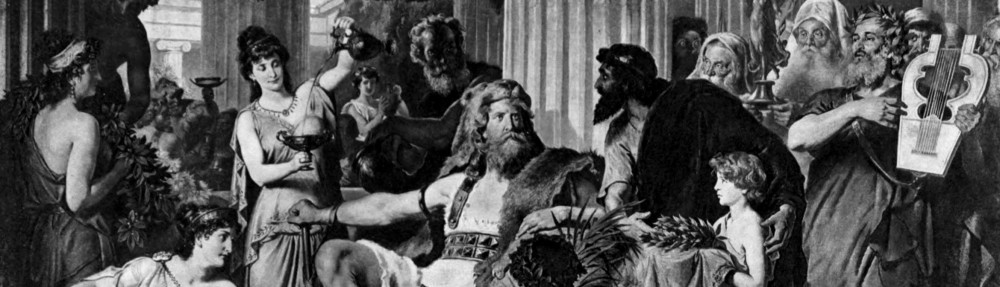
Nixon To Trump

It has been roughly fifty years since Nixon was forced from office. Watergate has largely slipped from our collective memory as most of the main players have slipped loose from this mortal coil. At the time, it was considered the greatest political scandal in American history, maybe even a near death experience. Nixon was not denounced as Hitler, but you can see the beginnings of that impulse in this period.

Another thing forgotten is that Nixon remained a bogeyman for the people we call the left long after the scandal. Reagan was compared to Nixon. The Democrat Congress relentlessly investigated him, sure that he was doing Nixon stuff. The Iran – Contra affair was supposed to be his Watergate. Bush I got the Nixon treatment as well with the whole October surprise business.

The election of Bill Clinton seems to have put an end to the Nixon stuff, as it boomeranged back on the Democrats. This also may turn out to be the high-water mark for the forces behind the toppling of Nixon and the aftermath. The managerial state has been in decline ever since. We are now at the final chapter of a period that started with FDR, climaxed in Watergate and may now be coming to an end.

The managerial system that was born under FDR, or at least came into practice, finally took control of the political system during Watergate. It was the “deep state” that took down Nixon and the “deep state” is just a spooky word for the permanent set of institutions that now govern us. The election of Trump in 2024, roughly fifty years after Watergate, may signal the end of managerialism.


For sites like this to exist, it requires people like you chipping in a few bucks a month to keep the lights on and the people fed. Five bucks a month is not a lot to ask. If you don’t want to commit to a subscription, make a one time donation via crypto. You can send money to: Z Media LLC P.O. Box 1047 Berkeley Springs, WV 25411-3047. You can also use PayPal to send a few bucks. Thank you for your support!


This Week’s Show

Contents

  • Intro
  • Nixon To Trump Fifty Years
  • The way To Think About Nixon
  • The Managerial Super Cycle
  • Nixon To Trump
  • Revolt Of The Economic Elite?
  • The Decline Of Managerialism
  • Managerialism Has Failed

Direct DownloadThe iTunes, iHeart Radio, RSS Feed

Full Show On Spreaker

Full Show On Rumble

Full Show On Odysee

The Signs Of The Next Times

One of the weird things about how the American empire operates is that there is a long waiting period between the presidential election and the installation of the winner, if the winner is not the incumbent. In most countries with elections, the transition happens within a week or two of the election. In America, the new president has months to wait for his turn at the wheel and the outgoing administration has months to do their worst, often with the goal of hobbling the next president.

The latter was on full display after the 2016 election. The last months of the Obama administration were used to set up the Russian collusion hoax, along with other schemes to prevent a smooth transition. The Trump administration was crippled right out of the gate, forced to go through the absurd theater of a special counsel to investigate what everyone knew was a political dirty trick. Between November and January, the fate of the Trump administration was sealed.

That is something to keep in mind this time. Like 2016, the political class was sure they had fended off the invisible army of orange Hitlers, only to find that their blue wall had crumbled once again. Unlike 2016 there was no way for them to claim it was fraudulent or illegitimate, since the results were conclusive. This may explain the relative quiet this time compared to 2016. By the standards of presidential elections, this was a trouncing in both the electoral college and popular vote.

It is possible that the energy has run out of crazy land. People want to think the madness set in during the 2016 election, but it started way back in 2000 when the people we call the left went nuts over the Florida recount. It has been a steady decline into madness for over two decades. That is a long time to sit in the pumpkin patch waiting for the conspiracy theories to be proven true. Perhaps they got tired of waiting and are making their way back to the fringes of sanity.

It is impossible to know, primarily because it is impossible for the non-ideological to understand the mind of an ideologue. The former group tends to the practical, while the latter tends to the fanciful. Most people think half a loaf is better than no loaf, while the ideologues look at such a compromise as a conspiracy against the tides of history and a justification for violence. It is why normal people are always surprised by how the ideologues react to events.

The best we can do is look for clues around the issues of the day. Project Ukraine, for example, has been central to the usual suspects for a decade. Trump is no fan of this project, and he is no fan of Ukraine. People tend to forget that Ukraine was central to his first impeachment. The people responsible for Project Ukraine are the main players in the anti-Trump stuff going back to 2016. They are also something like a drug-resistant virus that never stops trying to kill the host.

At the moment, what we are getting is the usual stuff from the usual suspects laundered in regime media as news and analysis. This Wall Street Journal story tries to frame the Trump plan as a choice between Russia surrendering or Russia giving Ukraine time to regroup and restart the war after Trump. This is the same narrative they have been shopping in one form or another for a year. In other words, the usual suspects may not have a scheme ready for Trump 2.0.

Another place to look for clues is in the antiwhite subculture. They have been weirdly muted for the past year. One reason is the backlash to DEI that took down a few prominent people. These were financed by members of the economic elite, which might mean money is drying up for the antiwhite bigots. This tweet from New York Times rage head Ida Bae Wells reads like a resignation letter. In 2016 these bigots were enraged by Trump winning, but this time they are despondent.

The antiwhite race rackets are worth billions, so there is no reason to think their relative quiet this time is a sign that they are about to fold up their tents and get jobs down at the local Home Depot. It is worth noting that crying “white nationalism” has lost all its punch over the last few years. In other words, their muted response could be part of a longer downward trend or simply part of a regrouping. Like the neocons, how these people respond over the next months will provide some clues.

Another area to watch to get a sense of what is happening is the media. Crazies like Rachel Maddow were slightly less nutty this time, but other nodes on the media rage machine were strangely sober. Again, the decisive victory this time might be the issue as there is no easy bogeyman for them to blame. On the other hand, the Biden debate performance and the aftermath may have broken whatever spell had kept these people within the narrative.

It feels like a lifetime ago, but the night of the Trump – Biden debate, it was clear that the chattering skulls were stunned to see that desiccated husk of Joe Biden drooling on himself and staring into the nothingness. It is possible that there was some sort of awakening among some parts of the media. These people are sociopaths, so no one should be optimistic, but how they react over the next months will provide some clues as to what is happening behind the scenes.

There are plenty of other places to look, but the reason it feels like there is an eerie calm over the battlefield is everyone expected the orcs to keep fighting, despite the results of the election. Instead, they have retreated over the hill and are murmuring amongst themselves. The thing to accept is they never quit. They will be back, so the question is in what form will they return? What path back to perfidy will they take in the coming months to continue the fight?


If you like my work and wish to donate, you can buy me a beer. You can sign up for a SubscribeStar or a Substack subscription and get some extra content. You can donate via PayPal. My crypto addresses are here for those who prefer that option. You can send gold bars through the postal service to: Z Media LLC P.O. Box 1047 Berkeley Springs, WV 25411-3047. Thank you for your support!


Promotions: Good Svffer is an online retailer partnering with several prolific content creators on the Dissident Right, both designing and producing a variety of merchandise including shirts, posters, and books. If you are looking for a way to let the world know you are one of us without letting the world know you are one one is us, then you should but a shirt with the Lagos Trading Company logo.

Minter & Richter Designs makes high-quality, hand-made by one guy in Boston, titanium wedding rings for men and women and they are now offering readers a fifteen percent discount on purchases if you use this link. If you are headed to Boston, they are also offering my readers 20% off their 5-star rated Airbnb.  Just email them directly to book at

sa***@mi*********************.com


.


An Amazing Time

One of the funny things about history is we have the benefit of hindsight and a good idea of how we want to shape it to fit our current needs, so we can choose who we like to be the great men of history. We also get to choose clever labels for certain periods that elevate them over other periods. The Age of Enlightenment sounds better than the Dark Ages and it flatters us to think we are the product of people who struggled from the muck of latter to create the former.

Of course, the people who lived in these times had a different view. The most famous example is the life of Jesus. Few people at the time cared at all about this man or even knew he existed. His followers, if anyone bothered to notice them, were just a number of such troublemakers kicking around at the time. Even after Christianity started catching on, most people saw it as another cult in an age of cults. Men of the first century would be shocked to learn they lived in the first century.

This is why we get our own age wrong. We want to think it is important, so we look for people and events to elevate, often not noticing men and events that will one day be considered the important bits of our age. Those old enough to remember the 1980’s marvel a bit at the changing fortunes of Ronald Reagan. At the time, it certainly seemed like he was a seminal figure. Now, he is looking like part of a transitional period from the Cold War to the ultimate decline of the American empire.

Probably the best example of this form of recency bias is Barak Obama. His fans at the time thought he was black Jesus. He was not just the first black president, but all the three letter heroes rolled into one swarthy savior. He was FDR, JFK, RFK and MLK with a dash of Lincoln thrown in due to having lived in Illinois. Less than a decade since he left office, he is a fading memory. His stumping for Kamala Harris in the election drew little media attention and had zero impact.

The truth is the great men of history are usually the epitome of some inflection point in the affairs of man. The communists are wrong to say that there are no great men, just great times that produce the necessary men. If someone bought one of Adolph’s paintings our past and present is very different. If Alfred the Great did not exist this post is written in runes rather than the English language. On the other hand, momentous times call forth the great man. Cometh the hour, cometh the man.

It is hard to know if we are living in a momentous time. It certainly feels like it, but these are relative things. Again, the 1980’s felt like the hinge of history. The Cold War and thus the fate of the world would be decided. It is now looking like the Cold War will not be viewed as all that important in the grand scheme of things. Maybe the convulsions of this age will similarly be viewed as a ripple in the timeline. On the other hand, last night could be a date people recall generations from now.

On the surface, it certainly looks like Trump is an important figure. Only one other president came back after a defeat to regain the White House. Grover Cleveland lost in 1888 and came back to win in 1892. Only a few former presidents have bothered to run again for anything, and their luck was all bad. This means Trump is now a “one of two” which is the second rarest of things in history. He is also the one of one in other things like impeachments and getting shot in the ear.

The Grover Cleveland example is a good reminder that being the first at something or even the only of something does not make for a great man. If Trump’s next term is quiet, then he could just as easily be forgotten. Given the circumstances around his political career, that seems unlikely. That is where the other part of the great man versus great times debate comes into the picture. This is a changing age. The world is changing, and the American civilization is changing with it.

That means future historians will no doubt pick some date or presidency to mark as the beginning of the change and then one as the end. Somewhere in that range will be Donald Trump or possibly, he is both ends of that range. We may look back at the Trump Era as the great transition from the post-Cold War America to whatever we call the period that comes next. Maybe it is called the multipolar age. It could also be the break from old America to the new, majority-minority America.

Again, it is hard to know about these things, but one thing we can be sure about is that we will not see another Donald Trump. Like the civilization that produced him, he has his faults, but those faults do not lie in anything sinister. No one has seen or will ever see a force of nature like this man. He is a Nietzschean figure in that he has fully embraced his destiny and lived it. He probably started his political career for superficial reasons, but in the end, he is the great man of his age.

As is always the case there will be plenty of people rending their garments and gnashing their teeth today. The “fascists” have won they will tell us, as they enjoy their luxurious lives of comfort. Others will seek to immiserate you by pulling forward their expected unhappiness so they can be miserable today. The rest will soak in the moment of having seen something no one will see again. It has been a dark and dangerous time but, well, e quindi uscimmo a riveder le stelle.


If you like my work and wish to donate, you can buy me a beer. You can sign up for a SubscribeStar or a Substack subscription and get some extra content. You can donate via PayPal. My crypto addresses are here for those who prefer that option. You can send gold bars through the postal service to: Z Media LLC P.O. Box 1047 Berkeley Springs, WV 25411-3047. Thank you for your support!


Promotions: Good Svffer is an online retailer partnering with several prolific content creators on the Dissident Right, both designing and producing a variety of merchandise including shirts, posters, and books. If you are looking for a way to let the world know you are one of us without letting the world know you are one one is us, then you should but a shirt with the Lagos Trading Company logo.

Minter & Richter Designs makes high-quality, hand-made by one guy in Boston, titanium wedding rings for men and women and they are now offering readers a fifteen percent discount on purchases if you use this link. If you are headed to Boston, they are also offering my readers 20% off their 5-star rated Airbnb.  Just email them directly to book at

sa***@mi*********************.com


.


Ivy Day Thoughts

If you were to ask an American to name a corrupt country, he would most likely pick one from what we used to call the third world. To a great degree, this is how we now define the term “third world”. It simply means corrupt. First world countries have transparency and the rule of law, while third world countries are opaque, and the rules are not always clear to the citizens of those countries. These days it is not unusual to hear Russia or China called third world, for example.

This is one of those legacy ideas from the 20th century that evolved with the times rather than following the Cold War into the history books. As a result, our rulers tend not to think much about the corruption in American society. It is just assumed, as it was in the Cold War, that Western countries are largely free of corruption, mostly due to the honesty of Americans, while the rest of the world is riddled with corruption. It is a form of the old good guy – bad guy view of the world.

The thing is you can quite easily make the case that America is one of the most corrupt countries in the world now. Today is election day and most Americans assume the vote counts will be corrupted with fake votes generated by the people who support things like mail in voting, drop boxes and ballot harvesting. In popular government, voting is the key to its integrity, but in the world’s greatest democracy, most people assume the vote is as corrupt as anything that happens in the third world.

The countries that holds elections, even the ones we still call third world, require voters to cast their vote in person and show that they are a citizen. The burden of proof is on the voter to show they are entitled to vote. In America, this basic safeguard has been corrupted through many schemes like mail-in voting, drop boxes and bans on voters showing their government identification. Anyone who questions the integrity of the vote must prove their case all the way to the Supreme Court.

Of course, the reason for that is the court system is now stuffed with judges who make up the rules based on their ideological whims. A judge in Virginia tried to stop the state government from purging foreigners from the voter rolls. The state had to appeal all the way to the Supreme Court. It was not a unanimous decision in their favor, because the three progressive fanatics sided with the foreigners. Courtrooms are now lotteries due to ideology, which is the definition of corruption.

It is fair to say that two pillars of “good government” in the liberal sense of the concept are free and fair elections and the rule of law. In present day America, we have thoroughly corrupt elections, and the rule of law exists only for the rich and those lucky enough to get a judge who is not driven mad with ideology. If what we see in present day America was happening in a South American country, the media reports would make corruption a center piece of their coverage.

That brings up a third part of the good government concept, a free press. The media in America is entirely controlled by the ruling class. Access journalism has been the norm for decades now. On top of that the media is staffed by people who are animated by ideological fervor. The result is a mass media that is so thoroughly dishonest it would have made the Bolsheviks wince. If you want to know what is not happening in the world, trust American media.

It is not that they are mere propagandists. The American media actively conspires with shadowy figures to deceive the public. The last decade should probably be called the age of media hoaxes. Many of them are so outlandish that it suggests we are living in a computer simulation run by drug takers. The mass media spent years covering a claim that Vladimir Putin used mind control to elect Trump in 2016. If Trump wins today, it will be more years of this insane conspiracy theory.

It is not just soft corruption, the stuff driven by ideological fervor, that has become normalized in America. Good old-fashioned bribery is the norm now. Look at the elected leaders of the two parties and what you see is they entered politics penniless and will exit as multi-millionaires. The reason for this is the elected officials who play ball get insider access to sure thing investments. The reason they are a sure thing is those same elected officials make sure of it.

In fact, it is fair to say that the American economy as a whole is as corrupt as the post-Soviet Russian economy controlled by oligarchs. Silicon Valley has been abusing the basic rights of American for years, with the full support of the state. The banking industry is nothing more than an industrial scale skimming operation. We used to put gangsters in jail for doing this with casinos. Now the gangsters have the state try to put you in jail if you question the ethics of our economic model.

It is hard to find anything in America that is on the level. Even benign stuff like social science data is corrupt. The government had to admit this year that they had been faking employment numbers. The FBI finally confessed that they had been faking crime figures, even the murder stats. Homicide numbers used to be the gold standard of crime data because it was assumed you could not fake them. Turns out in highly corrupt societies, you can fake anything.

After the Soviet Union collapsed, it was assumed it would take a few generations for the culture of distrust to subside. It did not take quite that long, but thirty years on and social trust remains low in modern Russia. It is rising quickly, but people still remember when you could not trust anything from the state or its supporters. Trust is one of those things that is easily squandered, but difficult to establish. Russia may never be a high trust society due its history.

This may be the fate of America. The average American, especially older Americans, still trust the system, even if they no longer trust the people running it. At some point, practical necessity forces people to stop thinking this way. You see this in the younger generations who are comfortable in a scamocracy. Add in demographic replacement and the ingredients are all in place for America to descend into the depths of kleptocracy and corruption associated with low-trust societies.

This is not to say we have decades more of this until the break. Historical analogies are not about stuffing the present into our model of the past. The point is to use a model of the past to gain insights into the present. In this case, the end was near for the Soviets when no one, not even government officials believed the official lies. By the 1970’s cynicism was the defining feature of the culture. The state lied, the people pretended to believe the lie and the state pretended the lie worked.

We may be reaching such a point. Today’s election is about a man who has been vilified, physically attacked and prosecuted by the state and their media agents for close to a decade. It is not about Harris. She is simply the face of a regime that people increasingly find odious and corrupt. Trump may be our Boris Yeltsin, a flawed but essential figure to facilitate the transition from the low-trust ideological regime of the past into something human and honest.


If you like my work and wish to donate, you can buy me a beer. You can sign up for a SubscribeStar or a Substack subscription and get some extra content. You can donate via PayPal. My crypto addresses are here for those who prefer that option. You can send gold bars through the postal service to: Z Media LLC P.O. Box 1047 Berkeley Springs, WV 25411-3047. Thank you for your support!


Promotions: Good Svffer is an online retailer partnering with several prolific content creators on the Dissident Right, both designing and producing a variety of merchandise including shirts, posters, and books. If you are looking for a way to let the world know you are one of us without letting the world know you are one one is us, then you should but a shirt with the Lagos Trading Company logo.

Minter & Richter Designs makes high-quality, hand-made by one guy in Boston, titanium wedding rings for men and women and they are now offering readers a fifteen percent discount on purchases if you use this link. If you are headed to Boston, they are also offering my readers 20% off their 5-star rated Airbnb.  Just email them directly to book at

sa***@mi*********************.com


.